Breaking Ground
hello hello :)

Hello Hello All,
I’ve been a bit slow to get this newsletter out, partly because I’ve been somewhat busy (which is a nice change for winter and real estate), but also because I’ve felt a little winter-stuck, as I sometimes do. That said, I’m really glad to be writing you as
everything is going to hell : (
I mean, everything has been just fine : )
We all know its somewhere in between. I think many of us have been strained by the news cycle, and I hope you’ve been able to find some reprieve within it.
I find myself seeking escapism, feeling it all, getting in sunny hikes when I can, and still feeling quite invigorated by the work I do here, which I try my best to translate through this newsletter. Even after five years of doing this work, I’m still met—by others and by myself—with questions about what my exact role is and who I work with. All of that, frankly, is still taking shape.
This thread is a written record of that unfolding.
So I want to share some gratitude for those who have been reading along and participating through online calls, in-person meetups, and private dialogues around personal projects and shared endeavors.
I named this newsletter Breaking Ground.
A client recently described their personal work as “above ground,” meaning it’s no longer underground, not hidden in the underbelly of culture, and not something vague or hard to point to. That phrase stayed with me. Much of my own work has felt very underground for years now.
For years, I’ve hosted meaningful conversations, facilitated and supported affordable housing efforts regionally, and been involved in farmland protection on certain land deals. But in many ways, I haven’t had a single visible project I could point to the way I once did in historic restoration.
No building.
No finished project.
No clear marker with my name attached to it.
Recently, I was asked where I could point to this work, and I realized I had nothing concrete to share—only conversations with clients and projects still taking shape.
That has been frustrating.
But I’m realizing that this invisible support—the knowledge sharing, relationship building, and early-stage guidance—is actually the core of my work. It’s where I’m most useful, and it’s something I’ve become genuinely skilled at.
No, I don’t yet have a single development that carries the label “regenerative.” And I’m learning that may not be the point. What feels more true is that I am helping projects take shape before they are visible—supporting people who are moving ideas toward reality and walking alongside others who are working toward similar goals. In many ways, our processes strengthen and inform one another.
This is the pre-development phase—the moment just before something comes into form. That’s where I’ve been leaning in.
At the same time, people understandably want to know what I’ve been up to. And much of my responsibility has required keeping certain things quiet for now.
I do this work with clients by previewing zoning potential, coaching them through visioning, raising funds, helping with branding and narrative, and introducing them to peers and organizations who may support them regionally. And still, there is very little I can physically show for it yet.
Writing that is a little painful. It has been five years of this work now. I am no longer just starting out, and I am learning patience along the way.
That said, I genuinely sense that this year feels different. I feel grateful to have begun the year with active clients who are ready to actualize thoughtful projects, and I am honored to be an earnest member of their teams.
I would warmly welcome a couple more earnest projects seeking to come into being. If you have been incubating an idea, or if we have connected in the past and the timing now feels right for momentum and relationship building, I would love to hear from you. It would be a joy to collaborate.
REGENERATIVE HOUSING MIXER
One of the clearer “above-ground” signs of this work has been the Regenerative Housing Mixers I’ve helped co-host, the first in October and the most recent one in Hudson. Both brought together builders, community activists, citizens, and real estate professionals into one room—a wide and thoughtful mix of people.
This last mixer was challenged by venue changes and last-minute snow, but the gathering still went on. Thank you to everyone who made it out.
Special thanks to Jared Spears for helping spark the dialogue, and heartfelt thanks to Hudson Harmonic for hosting us this time. Their newly renovated church is now dedicated to regenerative arts and culture in the Hudson Valley, which feels deeply aligned. I felt honored to be welcomed by their team.
They have a few events coming up on their calendar. I encourage you to check them out:
https://www.hudsonharmonic.com/
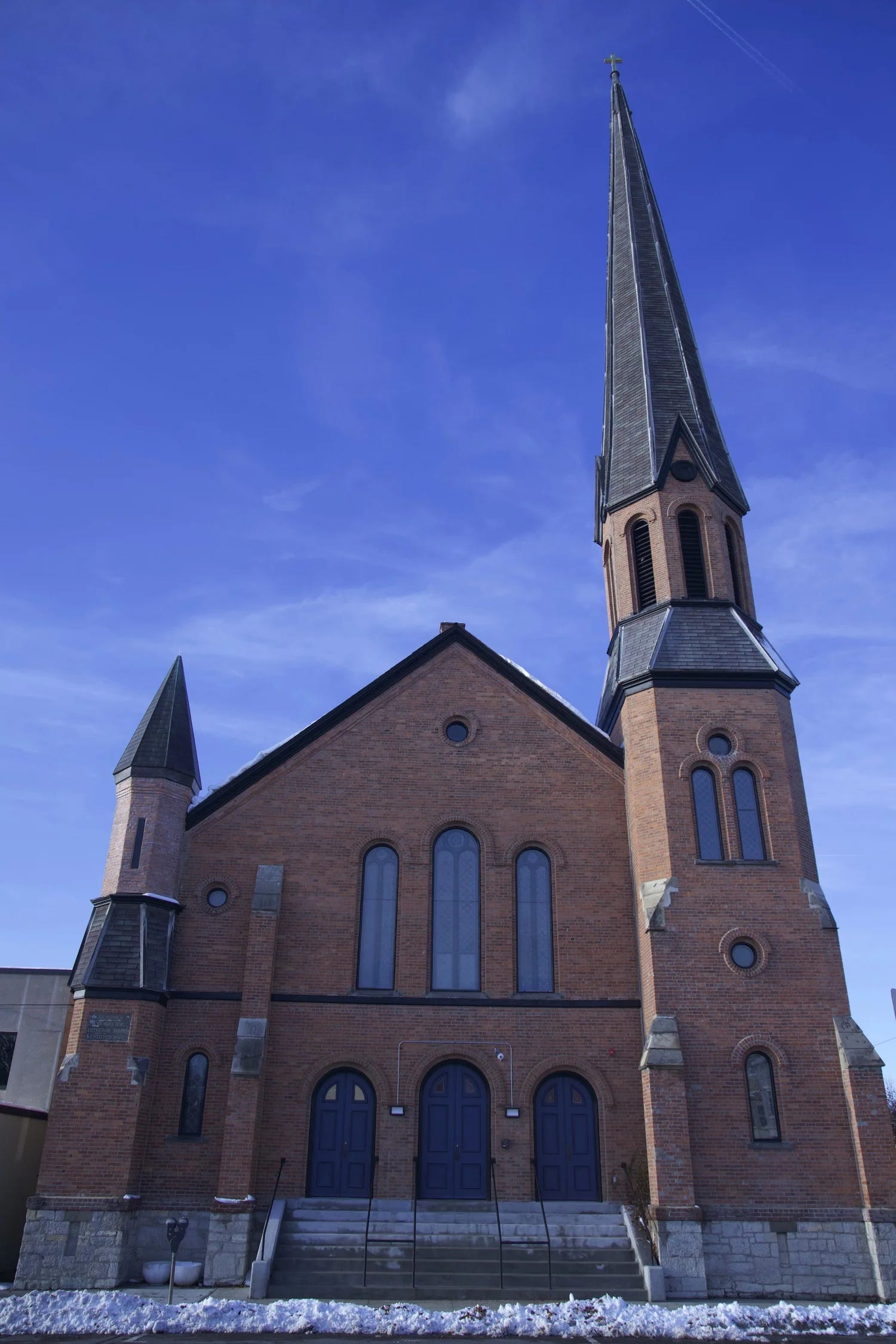
During the mixer, we explored “healthy alternatives” that are beginning to take shape in the region, with the hope that folks could meet one another who are working in this space. We shared time in conversation and centered our discussion around two main themes.
Growing regional supply
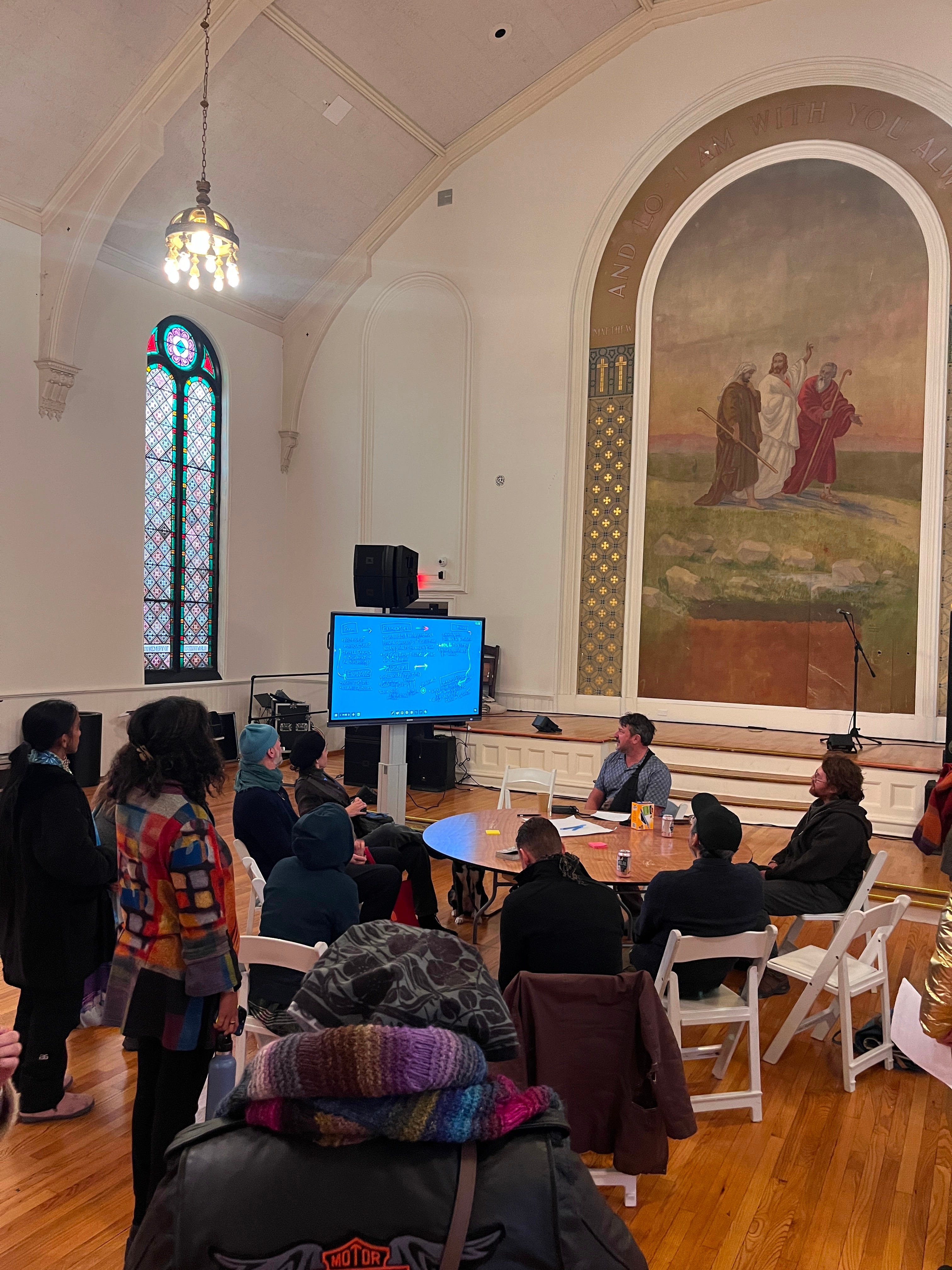
Our first conversation circle revolved around earth based and bio based materials that are natural, non toxic, energy efficient, and reduce long term costs. The group traced a “farm to frame” pathway across the value chain, much like farm to table but for buildings.
The hope is that our built environment, the production facilities, and the supply chains, along with the farms and soil they come from, are all nurtured along the way. There is a very clear overlap here with the regenerative agriculture field.
One of the clearest pain points that emerged was the lack of regional production facilities for these materials. This is an area where a lot of energy is gathering right now, and where groups are beginning to come together around new ways of connecting farmers and buildings.
Here’s to all buildings essentially being composotable in the future :)
Pooling resources
was our second dialogue, which aimed to bridge conversations between cooperative ownership structures, community land trusts, and those interested in co-purchasing property together in a community or cohousing model.
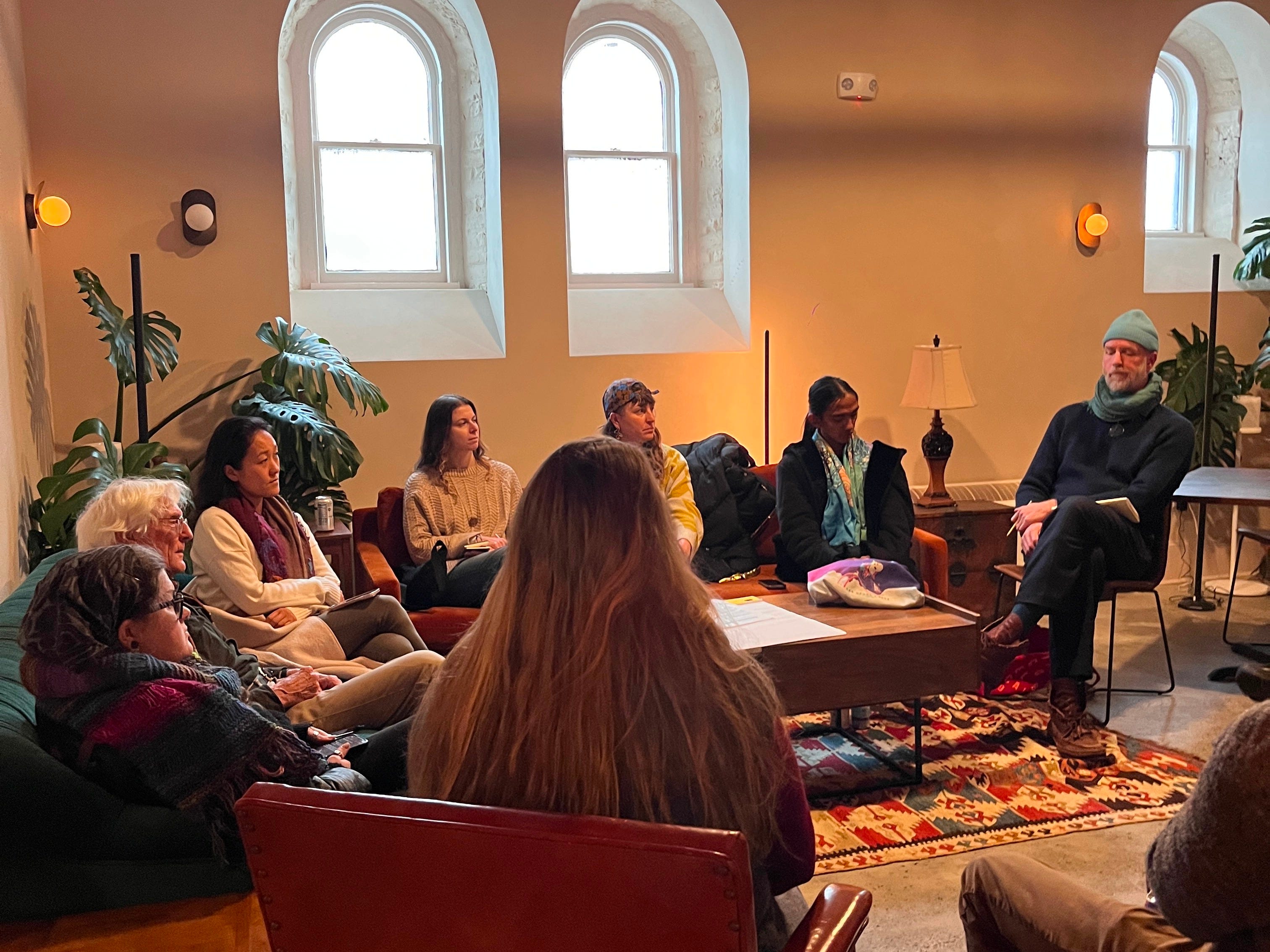
It was energizing to sense the different players in the room, to have them meet one another, and to feel a real desire to move away from traditional ownership models and toward more forms of “commoning,” where ownership is shared more widely and inherently encourages a collective approach to care and stewardship—much like a cooperative strives to be well-held by its members.
The Regenerative Housing Initiative has formed as an ad hoc group focused on community development, advocacy, and peer to peer connection. We hope you will be a part of this by joining as a member, participating in future events, and sharing your feedback. Thank you to everyone I’ve connected with since hosting these gatherings, and to those helping us imagine our next location. We have decided to host these mixers seasonally and are looking toward Dutchess County for the spring.
Shout out to Jared Spears, who helped spark this recent iteration of convening. Together, we are fiscally sponsored by the Good Work Institute.
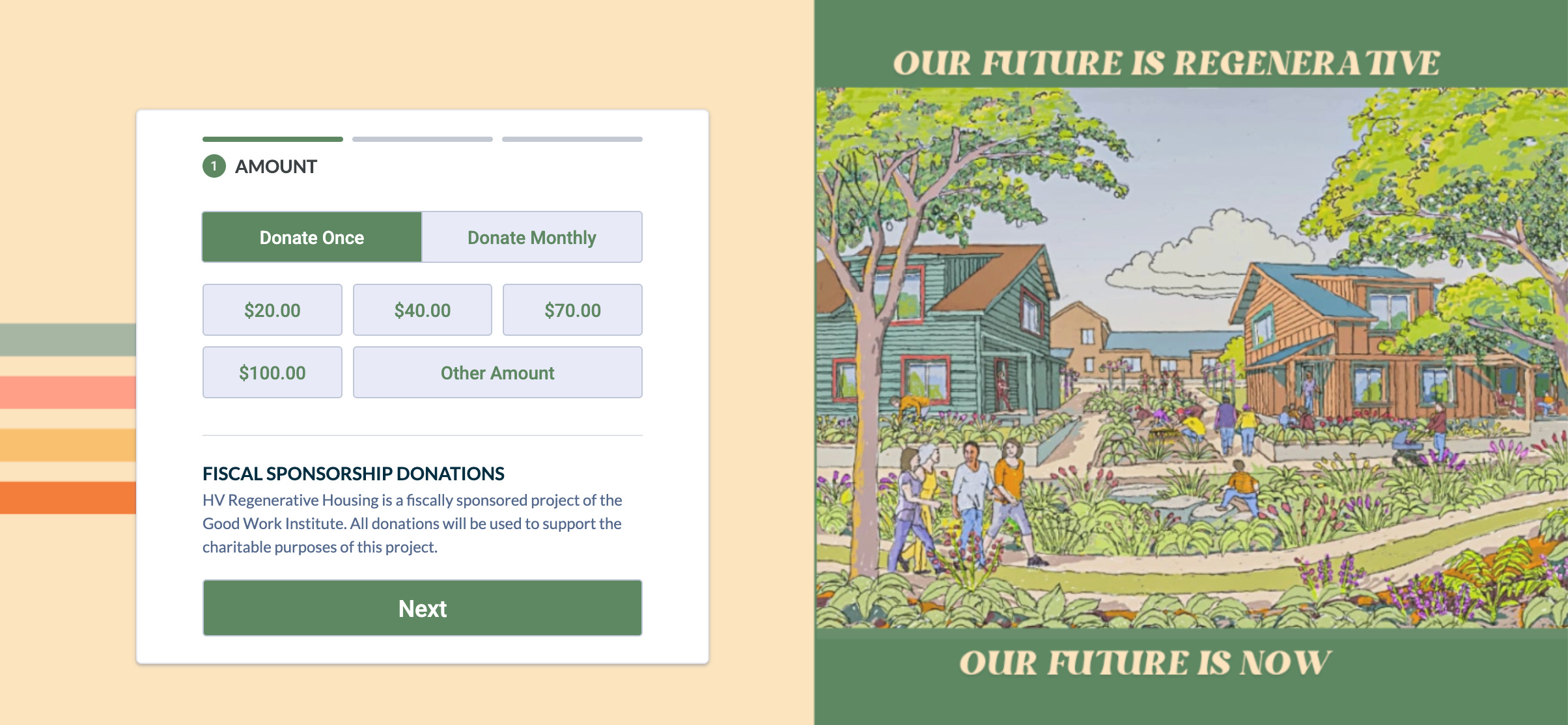
If you have attended a mixer and feel moved to support the next one, we now have a way to accept donations, either as a one time gift or through monthly support.
I have a goal of having a few subscribers here become members or contribute in this way. Please consider supporting by clicking the link below. any amount greatly appreciated, please take the five minutes :)
https://goodworkinstituteprojects.app.neoncrm.com/forms/hv-regenerative-housing
MORE ABOVEGROUND
Recently, I had a conversation with the folks at TapRoot Land Trust in Kingston alongside a client of mine. We explored potential paths for mutual support around a retreat and housing development project that is trying to hold two things at once: permanent housing with full equity and limited appreciation through land trust structures.
This project is also exploring ways to preserve farmland and offer access to local farmers. It’s a model that brings housing and agriculture into relationship, giving residents direct access to soil and a different way of living.
During that conversation, TapRoot shared an example of a limited-equity housing model already taking shape in Kingston: the James Street Housing Coop.
https://participate.ulstercountyny.gov/21-elizabeth
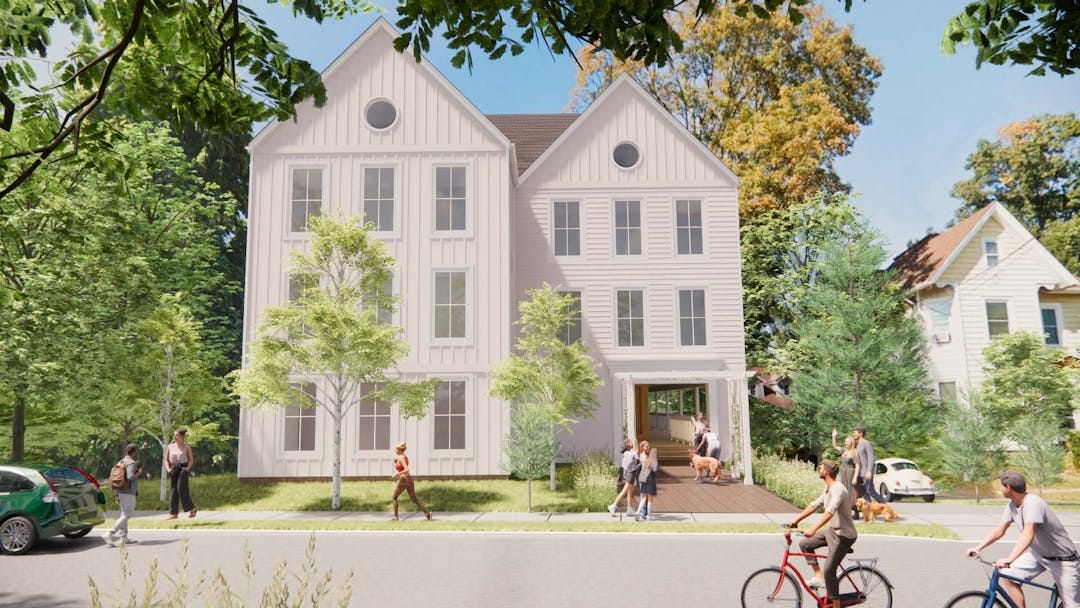
It is wonderful to see this beginning to take shape in our region. The Hudson Valley, while home to many beautiful farmhouses and historic cities, has not yet truly benefited from contemporary shared-equity housing models. These are only just starting to emerge through the work of land trusts.
In contrast, places like Vermont have long championed models like this. Through the Champlain Housing Trust, roughly one in eight households in Burlington now lives in permanently affordable, limited-equity housing.
It is a reminder that these approaches are not experimental. They are proven, and they can become part of the mainstream when they are supported over time.
ENDing
I wanted to close by sharing a few videos that recently found their way to me and felt connected to the themes of this work.
The first is a short documentary that surfaced in my YouTube algorithm. It offers a hyper-local look at the natural biodiversity of our region—waterways, insects, birds, and the people who celebrate them. It is an easy and beautiful watch, and a reminder of just how rich this place really is.
The second is a video from Caleb Simpson, who tours people’s homes in New York City. In this one, the conversation turns toward development rights, regulations, and restrictions, and reflects on the enormous complexity of building in NYC—and really anywhere in America. There is a vast web of rules that shapes how and where we can build, for good reasons and often very bureaucratic ones too.
That video brought me back to an experience I had years ago in Brazil. In 2016, I visited an intentional community deep in the jungle that had chosen its location partly because building codes were far more relaxed. They had built their community in a unique way—one that was not strictly to code, but still held reverence and respect for the place they were in.
I was lucky to spend two weeks there with a cohort of volunteers, staying together in a shared house. It was a deep experience—at times it even felt a bit cult-like in the woods—but nonetheless a powerful reference point for something alternative that I was able to witness firsthand. One of my favorite writers actually visited there sometime after me and referenced it in the article below. If you’re curious, you may find a more articulate perspective there:
https://charleseisenstein.org/essays/source-temple-and-the-great-reset/
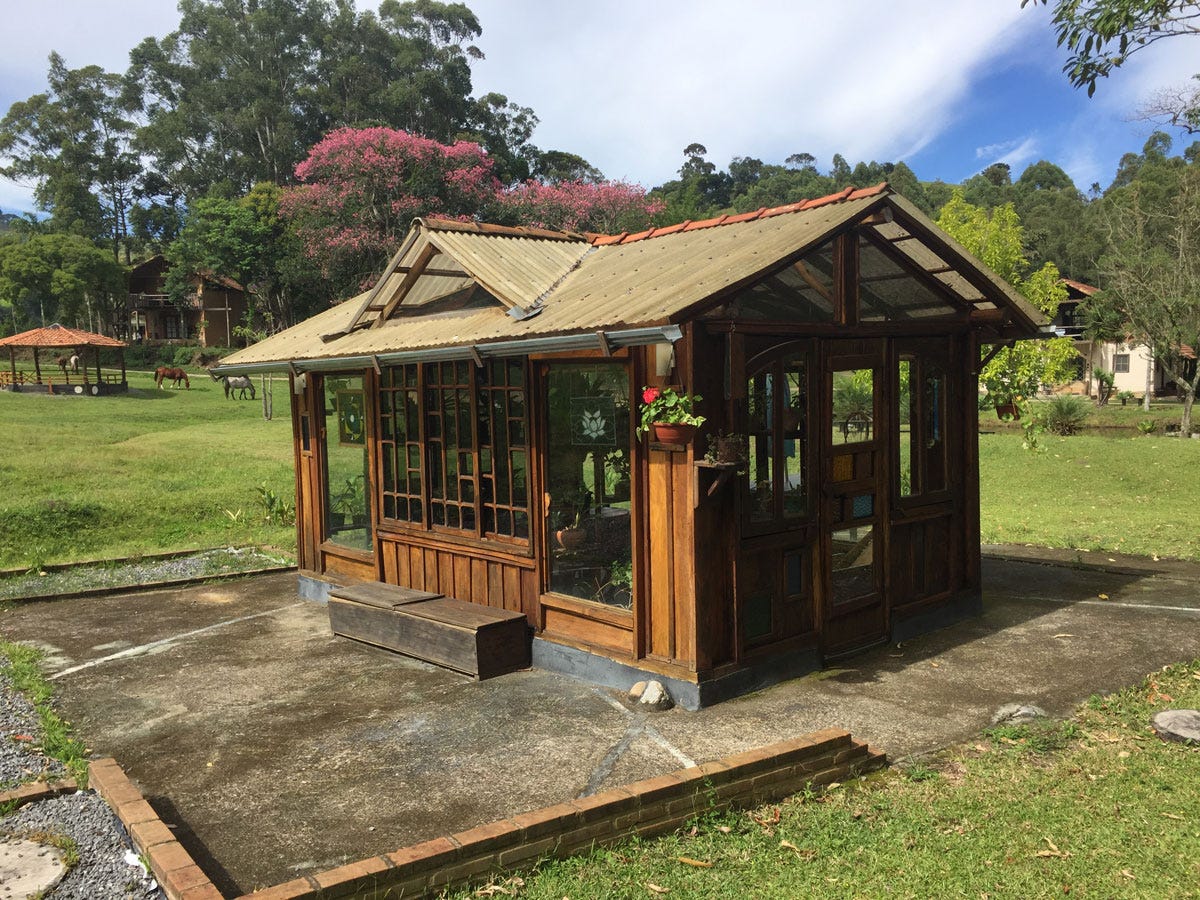
The first thing to make a deep impression on me at Source Temple was the architecture – if “architecture” is the right word to describe the improvisational artistry of its twenty houses and other buildings. Everything was built on a low budget using mostly scavenged, upcycled, and donated materials. No two doors or windows on the entire property are identical; all are hand-made. A lot of the windows aren’t even rectangular: someone built the window around whatever piece of broken glass was available.
Yet there is nothing sloppy or haphazard about the buildings. They are devotional. They embody the impulse: “I will make use of whatever is available to create the most beautiful, functional environment that I can.” They also embody a kind of precision that belies their irregularity. It is the precision of knowing what is meant to go where, what is in service to the building-to-be, the people who will use it, and the land that surrounds it. This consciousness guides the construction. None of the buildings started with architectural drawings or blueprints. They were not designed; they grew, with the builders as agents of their growth, implementing each next step as the final vision gradually resolved into clarity.
Much of what I do still feels underground, but that feeling is beginning to shift. This year feels like a year of breaking ground—of slowly bringing this work into clearer form. There is an obvious atmosphere of strain, chaos, and polarization taking on new shapes and extremes in the news and under our current administration. I hope you are able to find some solace in your days, some rigor in your work, and ways to have fun along the way.
What I still refer to as regenerative real estate feels to me like both a political and spiritual stance, a proactive antidote to the hyper-individualism and toxic power structures that have become so dominant. Models that reverse the trend of individually parceled-off lots, such as co-ownership and housing developments integrated with conservation easements—feel like part of that same impulse. Working toward housing that can one day return to the soil it came from feels connected to this as well.
They attempt to unwind the toxic patterns of how we inhabit both land and community, and instead offer a reconciliation—not only with the places we live, but with each other as well.