Market Forced
& more enoughness

Hello Hello All
I hope this finds you well. I have been a little quiet here. Not because I had nothing to say, but because it has been so beautiful outside that I kept choosing the sun instead of the screen. I brought my laptop with me a few times to write from certain benches and overlook points, but that felt a little ridiculous. So there was no October newsletter.
Life has been full. Client work, local events, statewide gatherings, and somewhere in the midst of it all, my fiancée and I finally secured a wedding venue :)
I have also had real estate conversations unfolding right at my dining room table. I am in the middle of exploring a possible seller-financing agreement with my landlord, who has been wonderful to us. Wish us luck as we continue to figure it out. There is a lot in motion. Many moving parts, a fair amount of complexity, and honestly, a lot of love.
All of this has brought me back to this idea of enoughness.
Do I have enough clients. Am I making enough money. Is there enough housing. Am I doing enough.
Some of us, are living with not enough in very real ways. And still, we make it work because we have to. Others seem to have more than enough and still cannot stop collecting, still benefiting from a system that rewards those who already have. And then there are people who do not have enough across the board, who can barely get started, while things like Medicaid and public benefits keep getting stripped away.
I keep thinking back to Occupy Wall Street. So many of the 99 percent were doing our absolute best to point to this simple truth. That the 1 percent, those economically on top, were holding such a tight grip on wealth and power that the rest of us were left to fight over what was objectively not enough. Not enough money, not enough social support, not enough room to breathe. This belief that we can all climb our way out through competition alone sounds inspiring at first, but left unchecked it becomes harmful. It keeps compounding.
And when I bring this closer to home, literally, it lands in housing. Real estate has been folded so deeply into capitalism that the places we live are treated first as assets, not as homes. Shelter, belonging, and stability are tied to market value, investment portfolios, speculation. Our houses become someone else’s wealth strategy. And when that goes unchecked, we end up with exactly what we are seeing now. Fewer people owning more. More people renting indefinitely. Homes treated as commodities rather than places of care.
I am not someone who wants to dive too deep into metrics or economic charts. But it is clear that while many of us are asked to make do with less, a few continue to compound more. And yet, even in all of that, I can say I have enough in many ways. I do not in others. Both things are true.
So maybe the question shifts from do we have enough to what, or who, are we measuring against. In regenerative work, people talk about widening the idea of capital. Not only financial capital, but social capital, cultural health, ecological health, spiritual well-being. Moving beyond a single or even triple bottom line.
And still, even when we expand what we measure, it can feel like not enough.
Market Forces
When I go to networking events, I usually write Regenerative Real Estate on my name tag. People ask what that means. I often say something like I point out the negative patterns in the real estate industry and help introduce healthier alternatives. And honestly, that is slowly becoming an exhausting stance, always pointing to what is wrong. I am holding some openness for a new way of saying it, a new way of being in it.
If I am at a dinner and do not feel like explaining, I just say I work in real estate and the conversation immediately turns to the market. As if the market is like the weather, something we have to brace for, something that arrives whether we want it to or not. As if it is this separate force that controls us, pushes us out of town, raises rents, decides who stays and who leaves.
And in many ways it does.
But I also believe we have the ability to shape markets, not only react to them. I was recently speaking with Taproot Community Land Trust in Kingston. Their work is simple but not easy. They take land off the speculative market. People pool money, agree on limits, and hold land in common so it cannot be flipped for profit.
Worker cooperatives, land trusts, community-owned spaces, they are reminders that markets are not fixed things. They are designed. They are cultural decisions. So if you are out there reading this, know that we are not only at the mercy of market forces. In small ways we can shift how the market moves through us. We are allowed to resist, to redirect, to redesign.
Also, wanting to share the TapRoot Land Trust will be hosting a community mixer soon. I’ll be there, know some of you will as well. see yous soon
https://www.eventbrite.com/e/taproot-community-housing-mixer-tickets-1859092117569
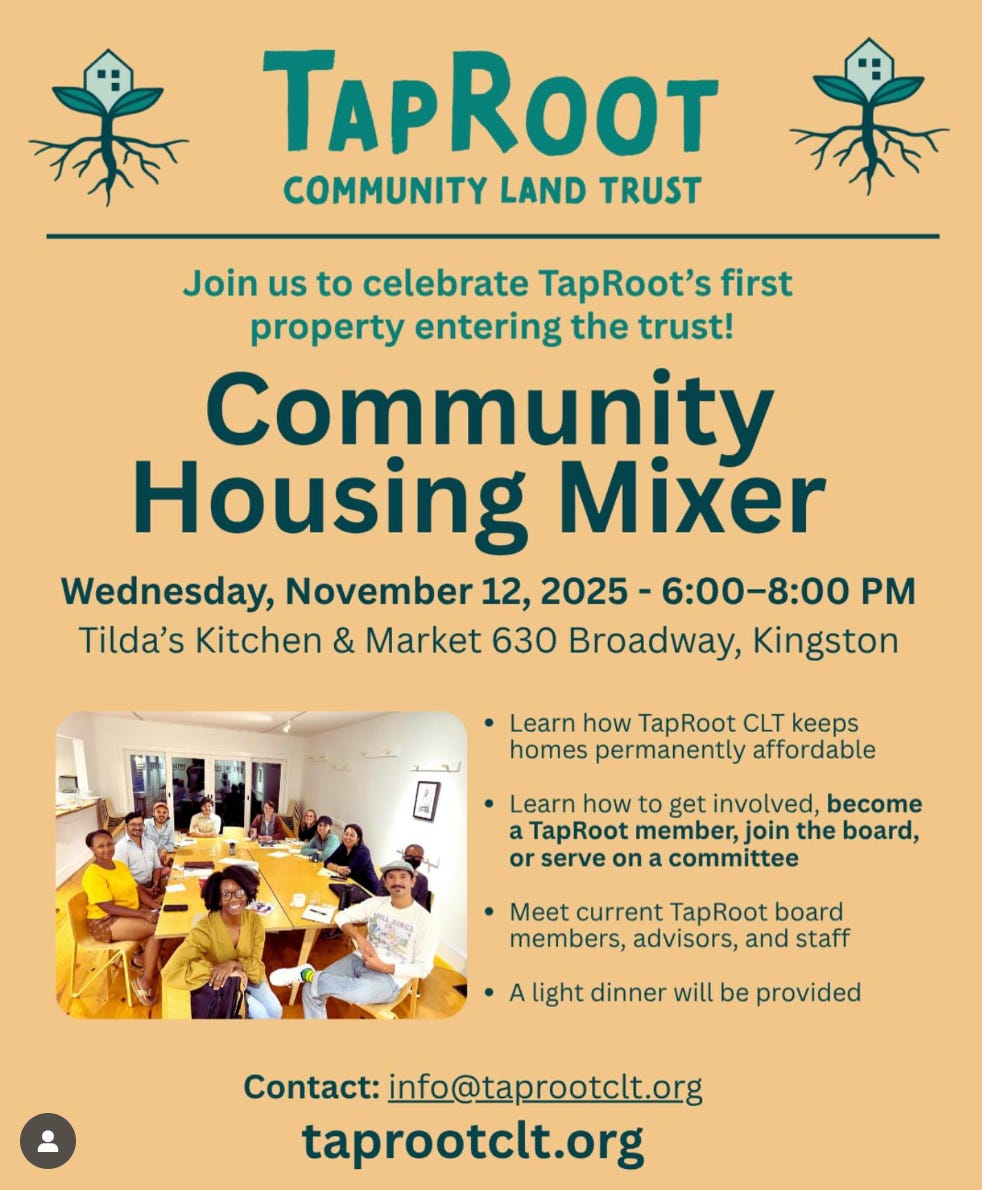
Also if youre really needing a dose of market forces, and data surrounding it. please check out Patterns for Progresses Q3 report. lots of helpful realtime info there
https://www.pattern-for-progress.org/wp-content/uploads/2025/10/HV-Q3-Market-Report-2025.pdf
Cooperative Summit
A few weeks ago I went up to Albany for the statewide Cooperative Business Summit. I was surprised to learn just how many cooperatives exist across New York, and also how few I am actually in relationship with here in the Hudson Valley.
Worker cooperatives widen ownership. Instead of profit moving upward into a smaller and smaller group of hands, it circulates among the people doing the work, or sometimes even the people receiving the service. It is not a perfect model, but it is a resilient one. During the pandemic, many cooperatives held together longer than traditional businesses. People did not lay each other off as quickly, because the workers were also the owners, and the community was not something external, it was them.
It was another good reminder me that capital is not just money. It is relationships, skills, land, tools, trust and indebtedness . Also hopeful by the continuous whispers im hearing locally around cooperative forms of investment and housing models. if this is of particular interest to you, please reach me would love to discuss/learn more bout your co-op ideas
Was able to snag a photo of me before a wonderful group shot
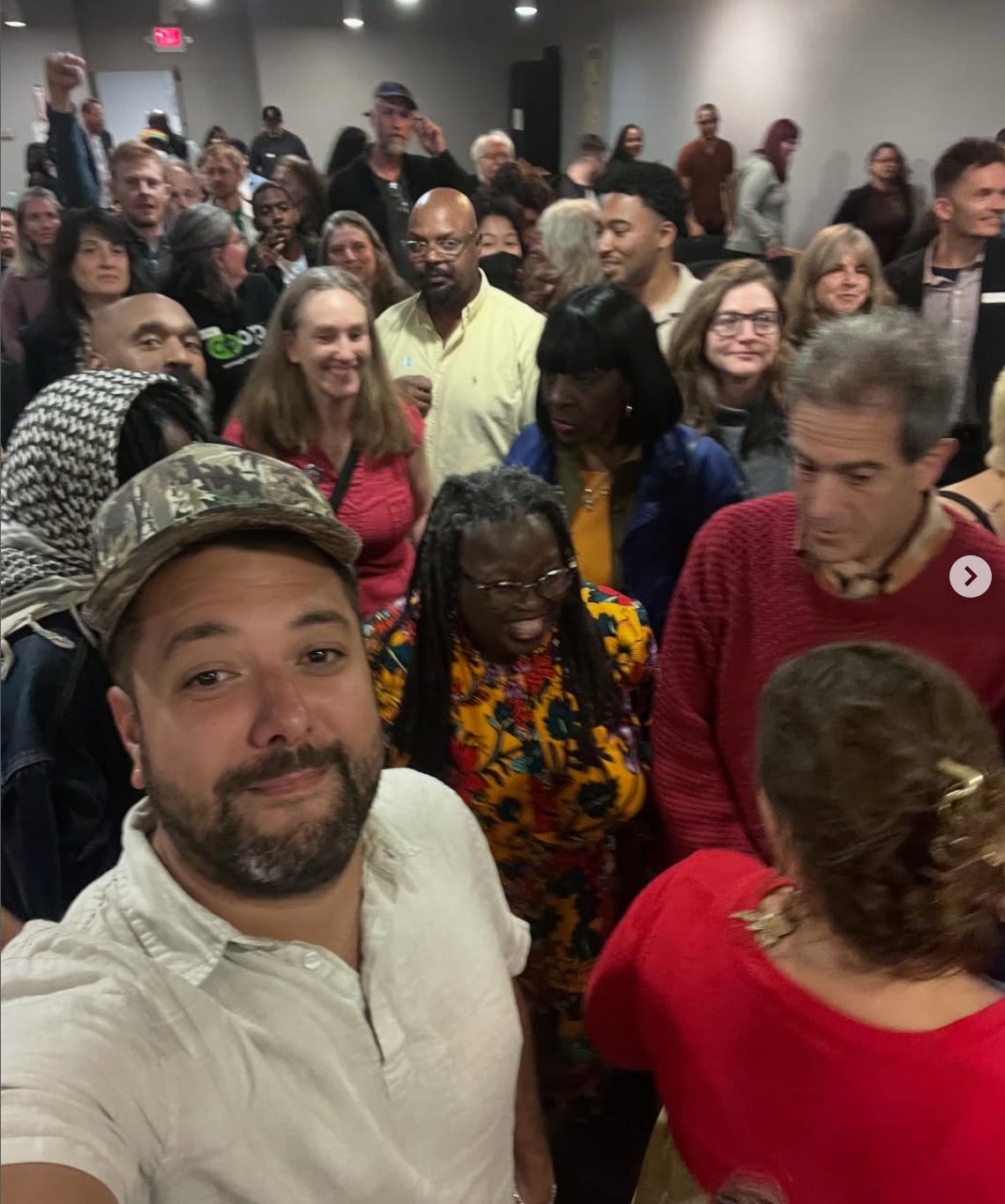
Event Reflections: Regenerative Housing
In early October we hosted a Regenerative Housing gathering at the Good Work Institute in Kingston. It was informal and beautiful with roughly 60 attendees. packed house! Thank you to Sevan Lloyd Pack, Jared Spears, and Skye Rizzuto for helping bring it to life :)
People came from all over the region. Once we settled in, we split into three small groups based on themes we felt sit at the heart of regenerative housing
Housing Enoughness
Ecological Building
Connected Communities


What struck me most was how many people who needed to meet finally did. Conversations that had been floating on their own started to weave together. There was a real sense of curiosity, relief, and support in the room. Those with enough, met those perhaps without enough and saught mutual support. At one point I heard someone say we do not have to wait for billionaires to figure this out for us. It landed in a big way.
And in that same breath, here is the honest part. We are seeking donations to help keep these gatherings going and give this work just a little more steadiness and support. Right now it is very ad hoc. It has worked, but we are reaching the limits of what volunteer time can hold.
I feel pulled in many directions after these meet-ups. People ask for support, perspective, time, and I care deeply about being available. I set aside hours each month to volunteer, but those fill quickly. So I have had to either say no or create some kind of boundary or compensation so the work can stay honest and sustainable. If you have felt that from me, I hope this provides some context.
I want to keep doing this work and I want it to be held with integrity. I also see people in nonprofit roles being paid to have these conversations every day. It has been a long-time dream of mine to feel some kind of institutional or collective support around this work. Maybe something like that can grow from these gatherings.
We are planning another one in mid January. It will remain free to attend. Space has been generously offered again by the Good Work Institute.
If you feel moved to contribute, or know someone who might, we would love to connect. And if you are someone who finds yourself closer to the top 1 percent, or simply have the means and feel called to support this movement in a real way, please reach out. I would love to have an informal conversation and see what kind of long-term support structure could emerge from this.
Becoming Regenerative
Back in 2020 I started using the #regenerativerealestate and felt pretty alone. I was just beginning. Over time I started to find others asking similar questions and approaching this work from different directions. Builders, planners, land stewards, organizers, designers.
There has been a quiet community around this work, shaped in part by the Regenesis Institute, by the work of the late Carol Sanford, and now held again through the Regenerative Nexus community. I have been part of helping spark some of these conversations, especially around the question of what regenerative actually means. Not as a brand or a label, but as a practice, a way of seeing, a way of working.
If that question feels alive for you, what is regenerative really, know you are not alone. There are so many of us sitting with that same question, wrestling with it, trying to live it. You would be in good company, and you might find a few of your assumptions gently challenged.
I have copied their invitation below for the first session happening next week. I plan to be there.
***you do have to join a “Circle” community and once in, you’ll be promted to make a profile and then have access"***
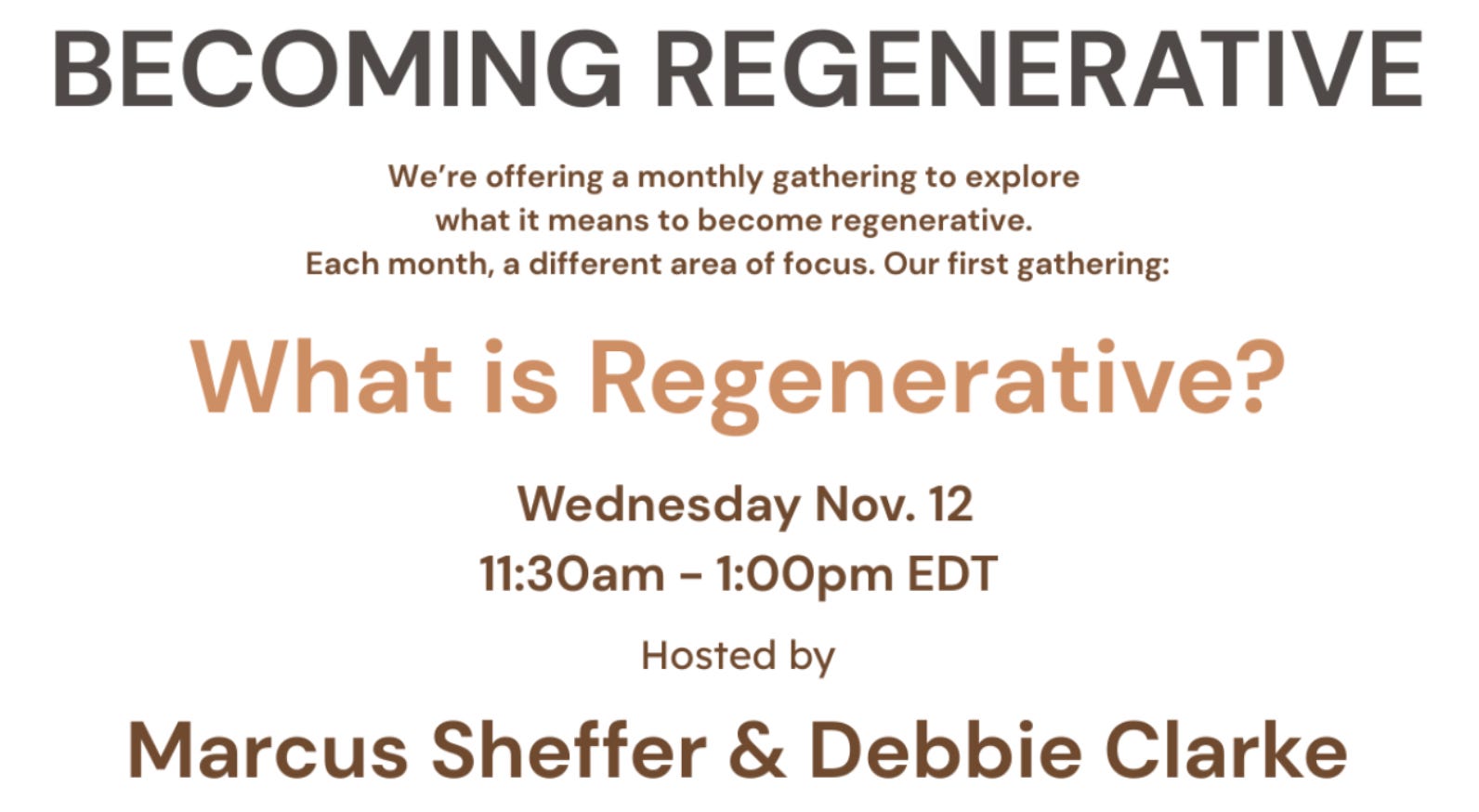
Are you curious about what it means to be regenerative?
We are extending an invitation for you to join us in a series of monthly sessions geared toward those who are largely unfamiliar with regenerative practice but intrigued to learn more, one small bite at a time.
If you:
believe that profound changes require an evolution of our collective mindsets and worldviews and are unsure of how to go about it
enjoy playing in the sandbox of ideas around how to shift our culturally conditioned ways
are frustrated with the inherent limitations of sustainability initiatives and metrics
experience profound disconnects from the dominant culture that surrounds us all and know humanity needs to grow up
wish to build your capabilities to more effectively understand complexity in systemic ways
Then these sessions might be just what you’ve been waiting for.
Who are we?
Regenerative Nexus emerged to enable system-change-makers to step into new levels of capability and “affectiveness” in creative new ways. We serve this purpose by tending to the reintegration of projects, learning, and communities. Under-supported projects, the evolution of how education works in our society, and the communities intertwined with both, all need one another to be regenerated.
Join our community to engage in these sessions.
Cost: Donation to Regenerative Nexus (a 501©3)
Link: https://regenexus.circle.so/join?invitation_token=4f39a115b2479e85b20de282e0a4cae01ef392ca-5ed7c0d0-4d16-4e6d-b750-f46ea2eb9adb
Date: Wednesday November 12
Time: 11:30 - 1:00pm EDT
Closing
Right, I have more I could say, but honestly I am tired of writing and you maybe tired of reading. I mostly enjoy this process though, and I hope these reflections and invitations do something for you.
Since last night, New York City has a major new political player in Zohran Mamdani. I am for it, I am for him, and at the same time I feel completely disenfranchised by politics. It is not usually the lens I see through, but the political sphere And the work I am in, if I had to name it, probably leans in the direction of democratic socialism.
Communism and socialism have carried a bad reputation since the 1940s, for real reasons. A lot went wrong. But we have also given capitalism and free market forces a long runway, and it has squeezed our communities, our culture, and our natural resources. So I am hopeful that a new, modern take on democratic socialism might offer something that works for more of us. We will see.
P.S. I realize this thread is the main connection point I have with some of you. To those I end up seeing in person, thank you for letting me know you read this. I recently asked ChatGPT to make me a flyer as an experiment. This is what it came up with.
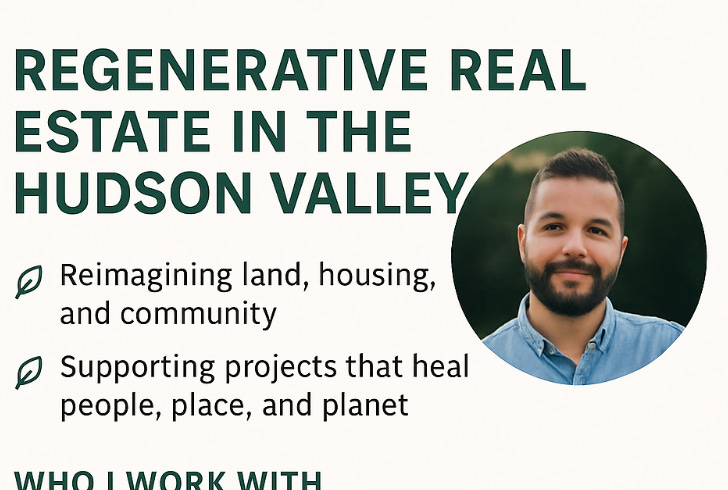
Lol. I do not look like that. And yes, even these words are a bit ChatGPT-filtered. Still me, but AI-shaped. and if your abusing chat gpt like i have, please stop.
Hope we get to talk in real life too. reach out!
Thanks for writing this, it clarifies a lot. The whole idea of 'enoughness' really hit home. It's such a nuanced and essential question, especially when you consider the systemic imbalances. Some people genuinely struggle while other seem to accumulate endlessly without ever feeling content. It makes you think deeply about what true societal well-being really means.